Signs It’s Time to Repaint Your Exterior in Cranston
Spring has a way of drawing attention to things you stopped noticing over the winter. The siding looks duller than you remember. There is something peeling near the trim. A section of wood near the garage door looks different from the rest. If you are a Cranston homeowner standing outside and asking yourself whether your home is due for a fresh coat of paint, you are already paying attention to the right thing. Knowing the signs it’s time to repaint your exterior in Cranston is what separates a straightforward project from one that has been put off too long.
What Exterior Paint Does for Your Home
Most homeowners think of exterior paint as a finish. It is more accurate to think of it as a barrier.
A properly applied, fully intact paint system is what stands between your home’s wood, siding, and trim and everything the outside world delivers: rain, humidity, UV rays, freezing temperatures, and the expansion and contraction that comes with seasonal change. When that barrier is doing its job, moisture stays out, the substrate stays dry, and the structure underneath remains stable.
When the barrier fails, the consequences are not cosmetic. Water finds its way in. Wood begins to swell, soften, and rot. Repair costs climb. A paint job that needed to happen at the right time becomes a more involved project than it had to be. The signs covered in this blog are not just indicators that your home needs a fresh look. They are indicators that the barrier is breaking down.
Signs It’s Time to Repaint Your Exterior
Not every sign carries the same urgency, but each one points to a specific type of failure. A homeowner who can identify what they are looking at is in a better position to act before the damage behind the paint gets ahead of them.
Fading and Chalking
Fading is one of the most gradual signs on this list, which is part of why it gets dismissed. UV exposure breaks down the pigment in exterior paint over time, and the color loss tends to happen slowly enough that you stop noticing until the difference is significant.
Chalking is a step further along. Run your hand across the paint surface. If a white or chalky powder transfers onto your palm, the paint’s binder has broken down. The coating is no longer holding together the way it should.
Both signs point to the same conclusion: the paint has reached the end of its protective lifespan. The surface may look intact, but the chemistry that makes it effective is gone.
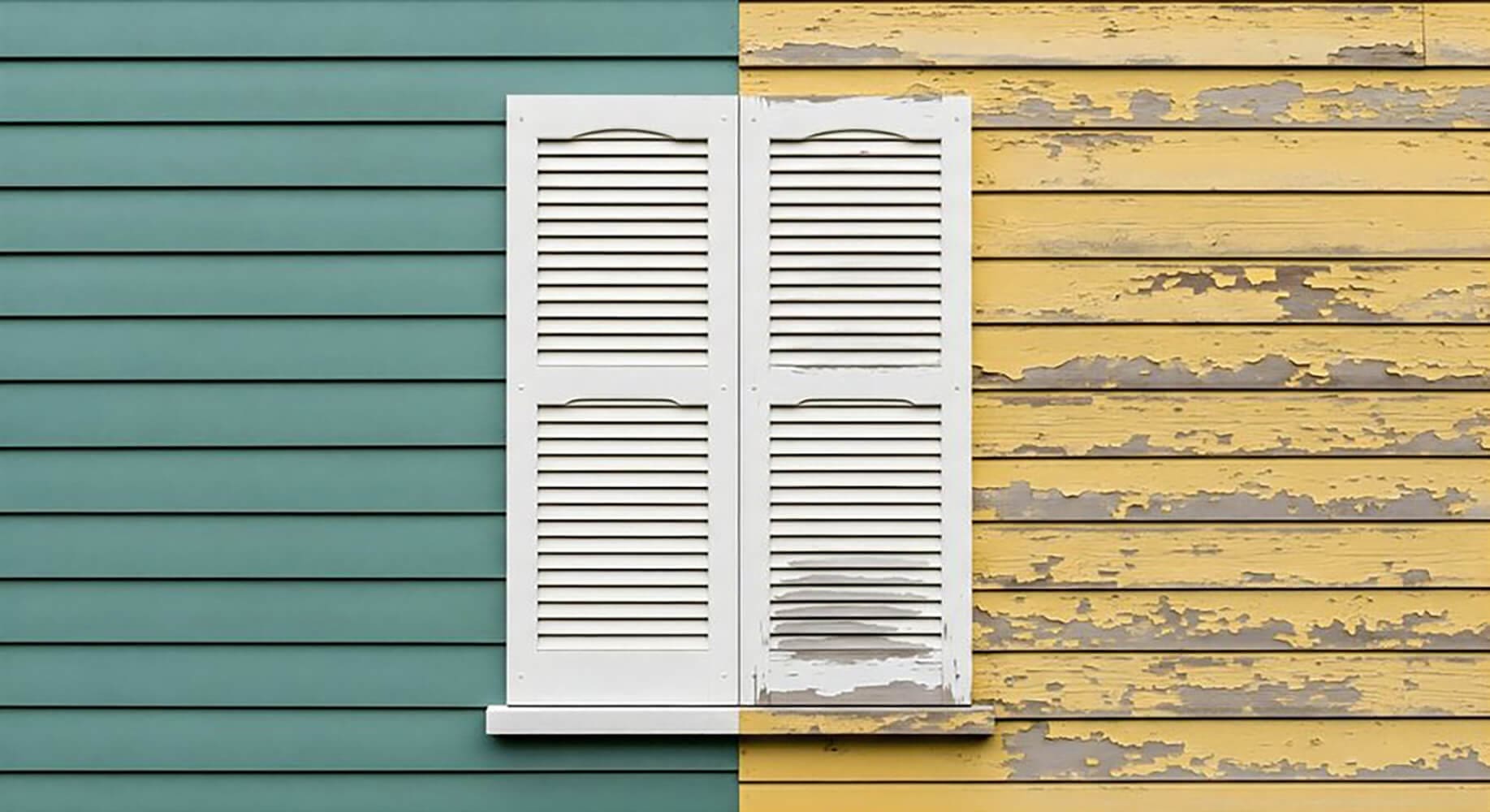
Peeling or Flaking Paint
Peeling happens when the bond between the paint film and the substrate fails. The two most common causes are:
- Moisture working its way behind the coating, which breaks the adhesion between the paint and the surface
- An aging paint film that has lost its flexibility and can no longer hold to the surface through temperature changes
Peeling rarely stays contained. Once it starts in one spot, the edges of the lifted sections continue to pull away and the affected area expands. Left alone, peeling paint leaves the substrate directly exposed to whatever weather comes next.
Cracking and Checking
Exterior paint expands and contracts with temperature. When a paint film ages past the point where it can flex with those changes, it fractures.
Shallow surface cracks, called checking, are the early stage of this failure. They run along the surface without penetrating through to the substrate. Deeper cracks that reach the material underneath are a more advanced stage and a more urgent problem.
Either way, cracks are entry points for moisture. That is what turns a paint problem into a substrate problem.
Bubbling or Blistering
Blisters in the paint surface form when something beneath the coating, moisture or heat, forces the film away from the substrate. A blistered surface is a signal that the paint is no longer bonded correctly to what it is supposed to protect.
Pay attention to what the blisters tell you:
- Blisters that appear in direct sun and disappear when temperatures cool are usually heat-related
- Blisters that remain regardless of temperature often indicate moisture is already moving through the wall system
- Blisters that have already popped leave raw, unprotected areas that begin deteriorating immediately
Bare Wood or Exposed Substrate
This is the most urgent sign on the list. When the paint is gone and the substrate is exposed, there is no longer any barrier between the material and the elements.
Bare wood absorbs moisture on contact. That moisture leads to swelling, softening, and the early stages of rot if the surface goes unprotected through a full rain season. Reaching this point also means the prep work required before repainting will be more involved. Damaged or softened wood needs to be addressed before new paint can go on, which adds time and cost to a project that would have been straightforward if caught earlier.
Staining That Won’t Clean Off
Exterior surfaces pick up dirt, pollen, and general grime over time. That is normal and cleans off without difficulty. Staining that persists after cleaning is a different situation.
Staining that will not come off typically indicates one of the following:
- Dark streaking or mildew discoloration from organic growth that has penetrated the coating
- Rust staining from fasteners or metal components bleeding through the paint film
- Discoloration from moisture that has moved through the paint and left deposits on the surface
None of these are cleaning problems. They are signs that the paint film has failed enough that contaminants have worked their way into or through the coating.
When These Signs Show Up, Have It Assessed
Each sign in this blog points to a specific type of paint failure, and most of them start small. Catching them early is what keeps an exterior repaint a manageable project rather than one that involves wood repair, extensive prep work, and a longer timeline.
Cranston’s spring and early summer window is when exterior painting conditions are at their best. Temperatures are moderate, humidity is lower than it will be in July and August, and surfaces are dry after winter. Homeowners who recognize these signs now and act on them still have time to schedule, prep, and paint before the most demanding weather of the season arrives. Those who wait until late summer often find the scheduling window has narrowed and conditions are less forgiving.
A professional assessment for exterior painting tells you exactly what you are dealing with. It confirms what you are seeing, identifies anything you may have missed, and establishes what prep work the surface actually needs before paint goes on. If your home is showing any of the signs covered here, reach out to us today to schedule an exterior assessment and get a clear picture of where things stand before the season gets away from you.