
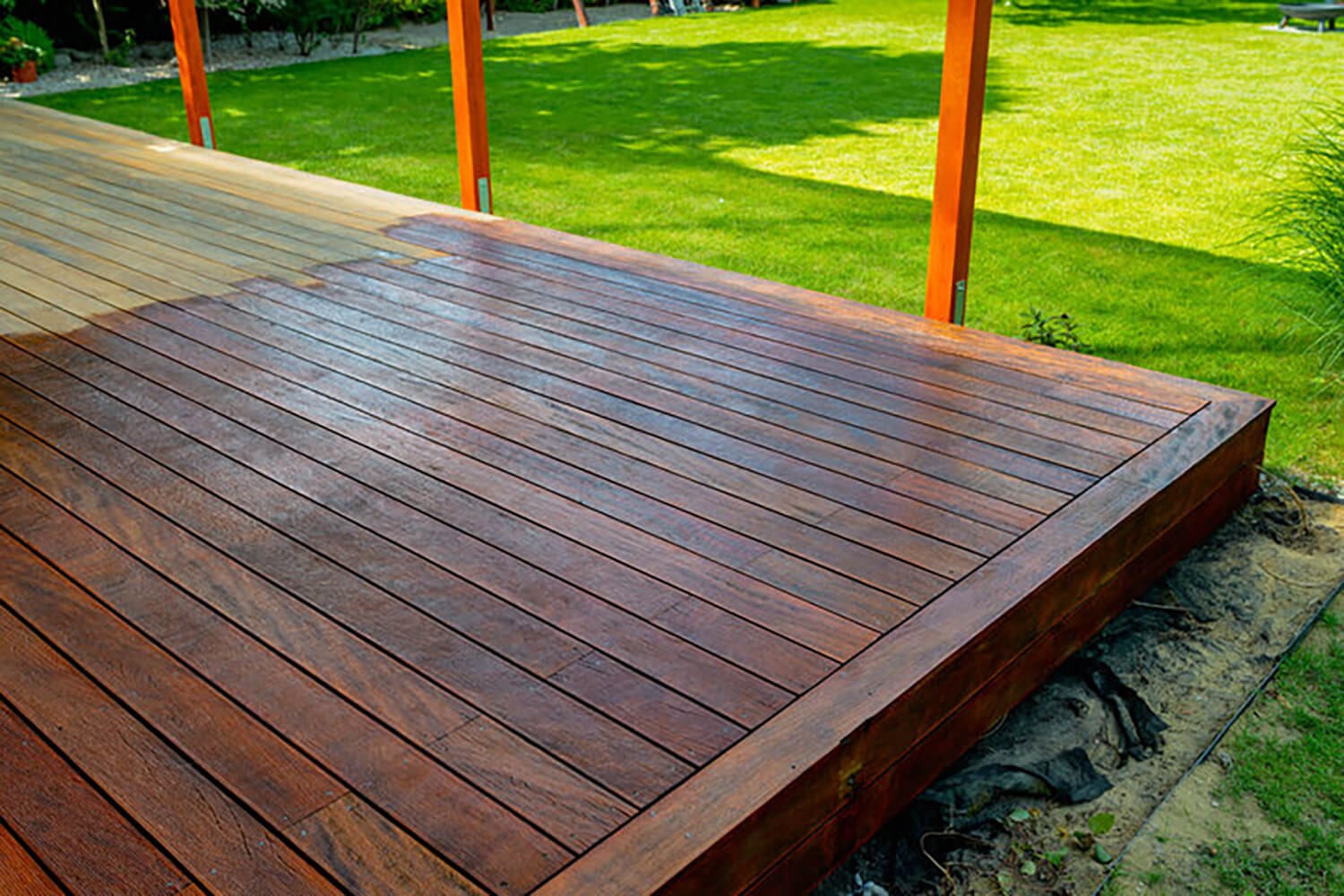
Signs Your Deck Needs Refinishing After Winter in Warwick
Winter in Warwick can be beautiful, but it is rarely kind to outdoor wood surfaces. Months of snow, freezing rain, and fluctuating temperatures quietly take a toll on decks, leaving them dull, worn, and sometimes unsafe by the time spring arrives.
If you have started noticing discoloration, peeling stain, or rough boards underfoot, you may be seeing the early signs your deck needs refinishing after winter in Warwick. Even decks that looked solid in the fall can show hidden damage once the ice melts and the sun returns.
Cold weather causes wood to expand and contract, moisture seeps into unprotected areas, and debris collects in corners and between boards. Over time, this combination weakens protective finishes and exposes the wood beneath.
In this guide, we will walk through how to recognize early warning signs, why spring is the ideal time to act, and how Warwick homeowners can protect their investment before minor issues turn into costly repairs.
Why Winter Is Tough on Decks in Warwick
New England winters create the perfect storm for wood damage. In Warwick, decks endure months of snow accumulation, freezing rain, and sharp temperature swings that stress both the wood and its protective finish.
One of the biggest culprits is moisture.
When snow sits on a deck surface, it slowly melts during brief warm spells. That moisture seeps into tiny cracks and porous areas in the wood. As temperatures drop again overnight, the trapped water freezes and expands.
This repeated freeze-thaw cycle is especially common in coastal Rhode Island and can lead to:
- Hairline cracks that widen over time
- Warped or cupped boards
- Raised grain and rough textures
- Loosened fasteners and nails
Even small amounts of expansion and contraction add up after months of exposure.
Salt and debris add another layer of damage.
Road salt tracked onto the deck from boots can dry out the wood and break down stain or sealant. Leaves, dirt, and organic debris trap moisture against the surface, creating an environment where mildew and algae thrive.
Without proper protection, all of this contributes to deck damage after winter in Warwick. The wood becomes more vulnerable to UV exposure once spring sun returns, accelerating fading and finish breakdown.
Winter does not usually cause one dramatic failure. Instead, it creates gradual wear that weakens the surface layer and shortens the lifespan of the deck if left unaddressed.
Signs Your Deck Needs Refinishing After Winter in Warwick
As temperatures rise and outdoor spaces come back into use, it becomes much easier to recognize the signs your deck needs refinishing after winter in Warwick. Some issues are cosmetic and affect appearance, while others signal that the protective finish has weakened and the wood is becoming vulnerable.
Faded or peeling stain is often the first noticeable change. If your deck once had a rich, even tone but now appears dull, patchy, or gray in certain areas, the protective layer has likely broken down. Peeling, flaking, or thinning stain suggests that moisture has already penetrated beneath the surface coating and begun compromising the finish.
Surface texture can also reveal winter damage. When you run your hand across the boards, they should feel relatively smooth and sealed. If the wood feels rough, raised, or fuzzy, winter moisture may have lifted the grain. Splintering boards are not just unattractive; they can create safety concerns, especially during barefoot summer use.
Soft spots require closer inspection. Press gently on darker or heavily stained areas to check for sponginess. Wood that feels soft under pressure may have absorbed moisture beyond the finish layer. While refinishing cannot repair structural rot, addressing surface exposure early can help prevent additional boards from deteriorating.
Mold or mildew patches are another common indicator of deck damage after winter in Warwick. Black or green spotting often forms in shaded corners, along railings, or between boards where leaves and debris collected. Although surface mildew can sometimes be cleaned away, persistent staining usually means the sealant has weakened and is no longer fully protecting the wood.
Discoloration and uneven tone may also signal that it is time to refinish. Areas exposed to direct sun often fade more quickly than shaded sections, creating a blotchy appearance. This uneven wear suggests that the protective barrier has thinned and is no longer providing consistent coverage.
A simple water test can confirm your suspicions. Sprinkle a small amount of water onto the deck surface and observe how it reacts. If the water beads up, the sealant is still functioning properly. If it soaks in quickly and darkens the wood, the finish has likely worn away and is no longer providing adequate protection.
While these signs may seem minor at first glance, addressing them early helps prevent deeper structural issues. Refinishing at the right time restores appearance, strengthens surface protection, and prepares your deck for heavy summer use before small problems turn into costly repairs.
When to Refinish a Deck in Spring
Knowing when to refinish deck in spring conditions is just as important as recognizing surface damage. Timing affects how well the stain bonds, how evenly it cures, and how long the protection will last.
Warwick’s early spring weather can be unpredictable, so waiting for the right window matters.
Ideal refinishing conditions typically include:
- Consistent daytime temperatures between 50 and 85 degrees
- Overnight lows that stay above freezing
- Low to moderate humidity
- No rain in the immediate forecast
- Dry wood with no lingering surface moisture
Applying stain too early in the season can lead to poor adhesion. If temperatures drop significantly at night, the curing process can slow down or become uneven. Excess humidity can also trap moisture beneath the finish, shortening its lifespan.
In Warwick, late March through early May is often the most reliable timeframe. By this point, freeze-thaw cycles become less frequent, and decks have had time to fully dry after snowmelt. Acting within this window helps ensure the wood is stable and ready to accept a new protective layer.
Waiting too long can create other challenges. As temperatures rise and homeowners shift focus to outdoor projects, contractor schedules fill quickly. Delaying refinishing until late spring or early summer may mean longer wait times and fewer flexible appointment options.
Planning early allows you to secure a spot during optimal weather conditions, giving your deck the protection it needs before peak summer use begins.
Tips for Early Spring Deck Care
Even before scheduling refinishing, homeowners can take a few proactive steps to support early spring deck care. These small actions help you assess overall condition and prevent minor issues from getting worse while you decide on next steps.
Start with a thorough surface clearing:
- Sweep away leaves, twigs, and dirt that accumulated over winter
- Clear debris from between boards to improve airflow
- Remove planters or furniture that trap moisture underneath
Debris left sitting on the surface holds moisture against the wood and can accelerate deterioration. Simply allowing the deck to breathe makes a noticeable difference.
Next, give the deck a light rinse or gentle cleaning:
- Use a garden hose or low-pressure wash setting
- Avoid high-pressure spraying that can damage wood fibers
- Use a mild deck cleaner if mildew or staining is visible
The goal is not aggressive stripping, but surface evaluation. Once clean, it becomes much easier to see cracks, fading, or soft spots that were hidden beneath grime, and you can even review efficient staining techniques for railings and similar areas before refinishing.
Conduct a quick structural inspection:
- Check for nails or screws that have popped up
- Look for small cracks along board edges
- Press gently on discolored areas to test firmness
- Examine railings and stairs for stability
If boards feel soft, unstable, or severely warped, professional evaluation is recommended. Surface refinishing addresses wear and exposure, but deeper damage may require repairs before a new stain is applied.
Taking these early spring steps helps homeowners understand the condition of their deck and decide whether simple maintenance is enough or if refinishing is the smarter long-term solution.
Why Hire a Pro for Deck Refinishing
Refinishing a deck may look straightforward at first glance, but the process involves much more than applying a fresh coat of stain. Proper surface preparation, product selection, and timing all influence how well the finish performs over time.
DIY refinishing often runs into avoidable problems, including:
- Uneven stain application that creates blotchy color
- Inadequate cleaning that traps dirt beneath the finish
- Skipping sanding, which prevents proper adhesion
- Choosing the wrong stain type for the wood and climate
- Applying product in unsuitable temperature or humidity conditions
Even small preparation mistakes can shorten the lifespan of the refinishing job. If the wood is not fully cleaned and properly sanded, new stain may sit on top rather than penetrating, leading to peeling or premature wear.
A professional refinishing process is more methodical. Prep Smart Painting begins with a deep cleaning to remove embedded dirt, mildew, and old residue. Once the surface is fully dry, sanding smooths raised grain and opens the wood pores to accept stain evenly.
From there, high-performance, UV-resistant stain or sealant is applied with attention to consistent coverage and proper absorption, which is a key part of long-lasting deck staining protection. The result is not just improved appearance, but restored protection against moisture and sun exposure.
Professional refinishing also extends the life of the deck. By protecting the wood before structural damage develops, homeowners reduce the likelihood of costly board replacements or major repairs in the future. The combination of surface preparation, product expertise, and careful application ensures a finish that looks better and lasts longer than most DIY attempts.
Protect Your Deck Before Summer Hits
By the time warmer weather settles into Warwick, your deck becomes one of the most used areas of your home. Spring is the ideal time to address surface wear because the wood has dried from winter moisture, temperatures are more stable, and there is still time to correct issues before heavy foot traffic and sun exposure intensify the damage.
If you have noticed fading, splintering, discoloration, or water soaking into the boards, those are clear indicators that protective layers have thinned or worn away. Acting now prevents further moisture intrusion and helps shield the wood from harsh summer UV rays that can quickly accelerate deterioration.
Refinishing in early to mid-spring restores the deck’s appearance while reinforcing its durability for the months ahead. Instead of covering up problems, the process strengthens the surface and prepares it for gatherings, outdoor meals, and everyday use.
If your deck is showing signs of wear after winter, now is the right time to take action. At Prep Smart Painting, we provide professional deck staining services designed to restore color, strengthen protection, and extend the life of your outdoor space.
We carefully clean, prepare, and apply high quality stain products that are built to handle Warwick’s climate. Contact us today to schedule your free deck evaluation and let us help you protect your deck before summer is in full swing.