What Interior Trim Styles Are Most Popular in Cranston Right Now?
Interior trim tends to fade into the background until you start repainting or updating a room. Then suddenly, baseboards, door casings, and window trim become hard to ignore. Many Cranston homeowners reach that moment and realize they’re not sure whether their trim still feels current or if it’s quietly dating the space.
That uncertainty is common, especially in a city with a mix of older homes, renovated interiors, and newer updates layered on top of original details. What looks right in one house can feel out of place in another, which makes it harder to tell which trim styles are actually popular locally right now versus what just shows up online or in design magazines.
If you’ve been wondering what interior trim styles are most popular in Cranston, the answer isn’t one single look. Instead, a few clear styles are showing up repeatedly across homes, repainting projects, and interior refreshes. These choices reflect how people here are updating their spaces in practical, realistic ways.
This post breaks down the trim styles that are most common in Cranston homes today, how they’re being used, and why homeowners continue to gravitate toward them when refreshing their interiors.
Clean, Squared-Off Trim (Flat Stock and Simple Profiles)
This trim style is defined by straight edges, minimal detail, and a noticeably clean silhouette. Baseboards are usually flat with a simple top edge, and door and window casings avoid decorative curves or layers.
In Cranston homes, this style shows up most often in interiors that have been recently repainted or lightly updated rather than fully remodeled. Homeowners tend to keep the existing trim layout but opt for a simpler profile when replacing damaged pieces or making selective upgrades.
You’ll most commonly see this trim used in:
- Living rooms and main gathering areas
- Hallways and entryways
- Homes aiming for a brighter, more open feel
One reason this look has gained traction is how easily it works with updated paint colors. Clean trim lines help walls feel uninterrupted, which pairs well with lighter neutrals, soft grays, and warm whites that are common in current interior palettes.
Another factor is practicality. Flat stock trim is easier to maintain, easier to repaint cleanly when you understand what’s included in an interior painting service. For homeowners refreshing a space without changing its character entirely, this style offers a clear visual update without drawing attention away from the room itself.
As a result, simple, squared-off trim has become one of the most recognizable popular trim options in Cranston homes right now.
Traditional Trim Profiles in Older and Character Homes
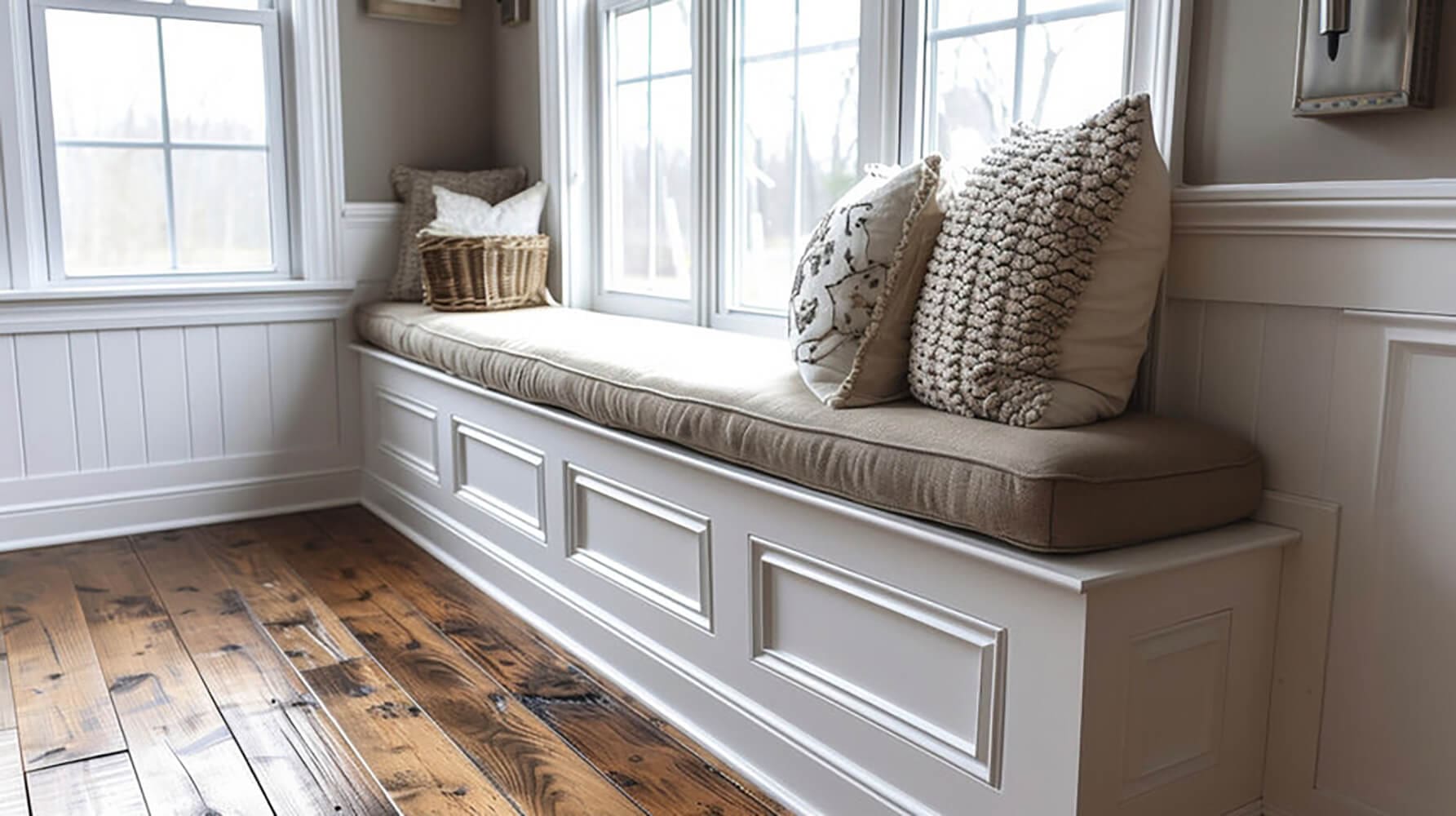
Traditional trim remains a familiar sight in many Cranston homes, especially those built before large-scale modern renovations became common. This style typically includes more detailed baseboards, layered door casings, and subtle decorative edges that add depth without feeling overly ornate.
You’ll most often see traditional trim in:
- Older single-family homes with original architectural details
- Homes where owners want to preserve period character
- Spaces where trim helps frame doors and windows as features
Rather than replacing these profiles, many homeowners choose to refresh them through paint, especially when planning finish carpentry in Cranston to preserve architectural character.
In some cases, homeowners selectively keep traditional trim in formal areas like dining rooms or stairwells while simplifying trim elsewhere. This allows the home’s original charm to remain visible without overwhelming more casual living spaces.
Traditional trim continues to be popular because it fits the structure of many Cranston houses naturally. When the profile matches the age and proportions of the home, it often feels more authentic than forcing a modern alternative. That balance between preservation and refresh is why this style still shows up frequently in local interior projects.
Transitional Trim That Blends Traditional and Modern
Transitional trim sits comfortably between clean modern lines and classic detailing. The profiles usually have a bit more shape than flat stock but stop short of ornate curves or layered edges. The result feels intentional without drawing too much attention to itself.
This style shows up often in Cranston homes that have been updated over time rather than all at once. Many homeowners are working with older layouts while refreshing finishes, and transitional trim helps bridge that gap. It allows original architectural elements to coexist with newer paint colors, flooring, and fixtures without creating visual tension.
Homeowners tend to gravitate toward transitional trim when they want their space to feel current but not stark. It softens rooms that might otherwise feel too modern, while still cleaning up the heavier look of older trim profiles. That balance makes it especially appealing for homes where walls are being repainted in warm neutrals or muted tones rather than bright whites.
You’ll often see this trim used throughout main living areas where continuity matters. Because it doesn’t strongly lean in either direction stylistically, it can move easily from room to room without feeling out of place. For many Cranston homeowners, transitional trim offers a comfortable middle ground that feels updated without committing fully to a modern aesthetic.
Mixed Trim Styles Used Intentionally Throughout the Home
Many Cranston homes don’t rely on a single trim style from front door to back hallway. Instead, homeowners are increasingly comfortable using different trim profiles in different parts of the house, as long as the choices feel deliberate.
Homeowners use this approach most often in homes they’ve updated in phases. They keep original trim in some rooms and introduce simpler or transitional trim in others during repainting or partial renovations. Rather than forcing uniformity, homeowners focus on how each space functions and feels.
Common patterns include:
- More detailed or traditional trim in stairwells, dining rooms, or front entries
- Simpler trim profiles in living rooms, bedrooms, or hallways
- Transitional trim used to connect older and updated areas
What keeps this from feeling consistent is using the same paint color and finish throughout the home. Using the same trim color throughout the home helps visually tie different profiles together, even when the shapes change. Consistent sheen levels also play a role, preventing one area from standing out unintentionally.
This mixed approach has become more common because it reflects how people actually live in and update their homes. Rather than chasing a single look, Cranston homeowners are choosing trim styles that make sense room by room, while still maintaining an overall sense of cohesion.
The Most Common Trim Styles Cranston Homeowners Are Choosing Right Now
When you look across interior painting projects and home refreshes in Cranston, a clear pattern emerges. Homeowners aren’t gravitating toward extreme or flashy trim designs. Instead, the most common choices reflect balance, practicality, and fit with the home’s existing structure.
Right now, the trim styles showing up most often fall into three familiar categories. Clean, squared-off trim appears frequently in recently refreshed interiors where homeowners want a lighter, more open feel without changing the layout. Traditional trim continues to hold its place in older and character-driven homes, especially when it’s repainted to feel clean and intentional rather than replaced. Transitional trim fills the space between those two, helping updated finishes blend naturally with original architectural elements.
What stands out is that popularity isn’t driven by trends alone. These choices reflect how Cranston homeowners are actually updating their spaces. Most projects involve repainting, selective repairs, or gradual improvements rather than full remodels, so trim styles that adapt well to those updates rise to the top.
If you’re trying to make sense of current interior trim styles, this context matters. The most popular trim options in Cranston homes are the ones that feel appropriate, easy to live with, and visually consistent with the rest of the house. Recognizing those patterns can make it much easier to decide whether your trim already fits—or if a simple update could make a noticeable difference.
If you’re thinking about updating your interior trim and want a second opinion before starting, we’re happy to help. At Prep Smart Painting, we take the time to walk through your space, talk through trim styles, and make sure everything works with your home and your goals. Reach out through our contact page to start the conversation and get clear guidance before your project begins.