
Why Winter Is a Smart Time for Finish Carpentry in Cranston
If you’re a homeowner in Rhode Island thinking about interior upgrades, it’s natural to wonder whether winter is the right time to schedule detailed work inside your home. Many people assume colder months are better suited for planning, not building, which leads to hesitation around projects like trim, molding, or custom woodwork. That uncertainty is exactly why homeowners search for why winter is a smart time for finish carpentry in Cranston.
Finish carpentry is different from large-scale remodeling or exterior construction. It’s precise, detail-oriented, and almost always done indoors, which means seasonal weather affects it far less than people expect. Still, questions come up around timing, comfort, scheduling, and whether waiting until spring makes more sense.
This topic matters because winter often creates unique opportunities for homeowners who want high-quality interior improvements without competing with peak-season demand. Understanding the real advantages and limitations of winter work can help you make a confident, well-timed decision instead of delaying a project unnecessarily.
The goal here is to clarify what types of finish carpentry projects are commonly done during winter, why this season can work in your favor, and what factors to weigh before committing. With the right expectations, winter can be a practical and efficient time to improve your home’s interior.
What Finish Carpentry Projects Homeowners Typically Schedule During Winter
Winter is when many homeowners turn their attention inward and focus on improving the details that make a house feel finished. Finish carpentry is especially well suited for this season because it’s primarily indoor work that doesn’t rely on outdoor conditions or extended daylight.
Most winter projects fall into a few familiar categories. These are the types of updates that improve function and appearance without requiring major demolition or weather-dependent work.
Common finish carpentry projects scheduled during winter include:
- Installing or upgrading baseboards, window trim, and door casings
- Adding crown molding to living rooms, dining rooms, or bedrooms
- Building custom shelving or storage features
- Refining existing trim that has gaps, damage, or uneven joints
These projects are often chosen because they can be completed in lived-in homes with minimal disruption. Homeowners are already spending more time indoors during colder months, which makes it easier to notice details that feel unfinished or dated.
Interior trim and molding work
Trim and molding upgrades are among the most popular winter carpentry projects. Baseboards, window casings, and crown molding all require careful measurement and precise cuts, which are easier to execute in a controlled indoor environment.
Winter scheduling also helps homeowners avoid the rush of spring renovations. Instead of waiting months to get on a calendar, trim work can often be planned and completed more efficiently.
Built-ins, shelving, and detail work
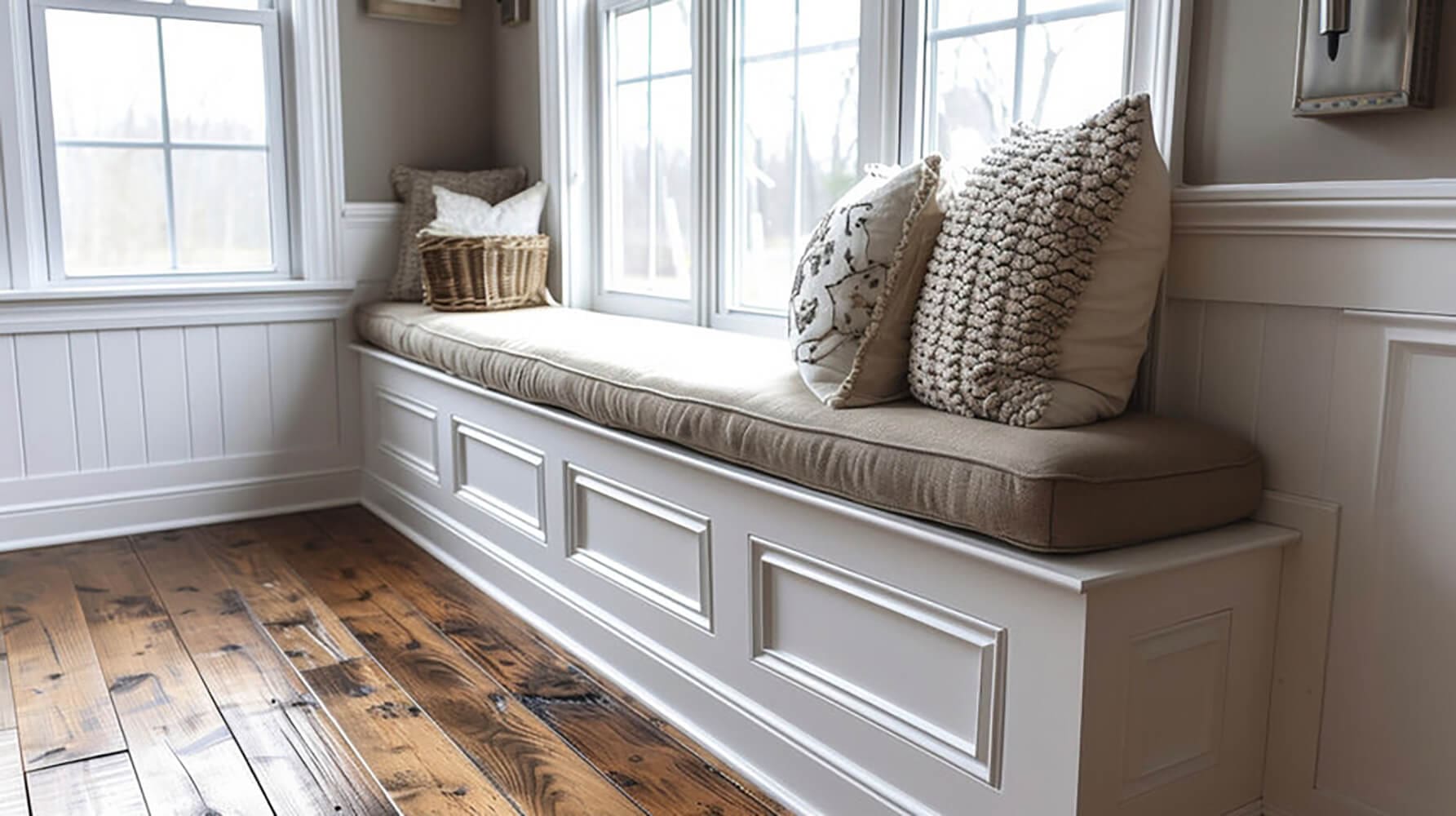
Custom shelves, mantels, and built-in storage are another common focus during winter. These projects add both visual interest and practical storage, especially in living rooms, offices, and finished basements.
Because these features are designed and installed indoors, winter carpentry indoors allows for steady progress without interruptions from weather or exterior job demands.
Why Winter Schedules Can Make Finish Carpentry Easier to Book in Cranston
One of the biggest advantages homeowners overlook is how seasonal scheduling affects contractor availability. In many areas, including Cranston, winter naturally slows down exterior construction and large renovation projects, which changes how trades schedule their time.
During warmer months, many crews are booked out weeks or even months in advance with exterior painting, additions, decks, and outdoor repairs. Finish carpentry often gets pushed into gaps between larger jobs, which can extend timelines for homeowners who wait until spring or summer.
Winter shifts that dynamic. With fewer weather-dependent projects competing for time, interior-focused work becomes easier to plan and schedule.
Homeowners often benefit from:
- More flexible start dates compared to peak seasons
- Shorter wait times to get on the calendar
- Better coordination if carpentry is part of a broader interior refresh
This doesn’t mean every contractor is suddenly wide open, but availability is typically less strained. That flexibility is especially helpful if you’re trying to align trim work with other interior updates like painting or flooring.
For homeowners with specific deadlines, such as hosting family gatherings or finishing a space before a move, winter scheduling can reduce stress. Instead of competing with peak-season demand, you’re working during a time when interior projects fit more naturally into professional schedules.
How Indoor Winter Conditions Can Benefit Finish Carpentry Work
Finish carpentry relies on precision, and the environment where the work is done plays a bigger role than many homeowners realize. During winter, indoor conditions in heated homes tend to be more predictable day to day, which can support detailed carpentry work.
When a home is consistently heated, temperature swings are usually smaller than during shoulder seasons when windows are opened and closed frequently. That stability makes it easier to take accurate measurements and maintain consistent spacing in trim and molding. While wood will always respond to its environment, steady indoor conditions reduce sudden movement that can affect tight joints.
Humidity is another factor. In winter, indoor air is often drier, especially in homes with forced-air heating. While extremely dry conditions require awareness, the lack of frequent humidity spikes can make planning and execution more straightforward. Carpenters can acclimate materials to the home and work within a more controlled range.
Winter carpentry indoors also benefits from fewer environmental interruptions. There’s no need to work around rain, high winds, or extreme heat, which can affect focus and workflow on other types of projects. For homeowners, that means the work is happening in a calm, predictable setting, which supports cleaner results and smoother progress.
Cost and Planning Advantages of Doing Finish Carpentry in the Off-Season
Winter often creates a more relaxed planning window for homeowners who want to be thoughtful about their interior upgrades. Without the pressure of peak-season competition, it’s easier to have detailed conversations about scope, timing, and sequencing before work begins.
From a planning standpoint, winter allows projects to move forward without being squeezed between larger exterior jobs. Homeowners typically have more flexibility to finalize design details, review trim profiles, and make decisions without feeling rushed. That breathing room often leads to better outcomes because expectations are clearer on both sides.
There can also be indirect cost advantages, depending on the project and schedule. While pricing varies and isn’t guaranteed to be lower, winter timelines can reduce the risk of last-minute changes or delays that drive costs up later in the year. Planning ahead during the off-season can help avoid premium scheduling or compressed timelines in spring.
Another advantage is coordination. Finish carpentry often pairs with other interior updates, and knowing what to expect during painting helps keep timelines aligned.
This season works well when homeowners want to:
- Combine trim work with interior painting
- Prepare spaces before furniture or décor changes
- Complete detail work before listing or reoccupying a room
By using winter as a planning-friendly season, homeowners can focus on quality and timing instead of competing with the busiest months of the year.
Potential Downsides of Scheduling Finish Carpentry During Winter
While winter can be a smart time for interior carpentry, it’s not automatically the best choice for every situation. Being clear about the potential downsides helps homeowners set realistic expectations and avoid frustration once work begins.
One consideration is how materials behave when brought into a heated home. Wood needs time to acclimate to indoor conditions, especially during colder months. Rushing that process can lead to movement after installation, which is why proper planning and patience matter more in winter.
Scheduling can also be affected by the season in subtle ways. Holidays, school breaks, and travel plans may limit when work can happen or how accessible parts of the home are. Shorter daylight hours don’t stop interior work, but they can influence start times or how crews structure their days.
There’s also the reality of living in the space during colder months. Windows and doors may need to be opened briefly for material delivery or ventilation, which is easier when homeowners understand how to prepare their home ahead of time.
These downsides don’t mean winter is a poor choice, but they do highlight the importance of communication. Understanding the limits of winter scheduling helps homeowners decide whether to move forward now or wait for a season that better fits their household and project scope.
How Finish Carpentry Often Pairs Well With Winter Interior Painting Projects
Winter is a popular season for interior painting, which makes it a natural fit for finish carpentry work. These two projects are closely connected, and timing them together can lead to cleaner results and fewer disruptions overall.
Finish carpentry is typically completed before painting so trim, molding, and built-ins can be properly filled, sanded, and prepared. When both projects happen in the same seasonal window, the transition from carpentry to painting is smoother. Surfaces are finished once, rather than being touched up or redone later.
Winter schedules make this coordination easier, especially when planning winter interior painting projects alongside trim and finish work.. Interior painters are often focused on indoor projects during colder months, just like carpenters. That alignment reduces gaps between trades and helps maintain momentum once work begins. Instead of waiting weeks between steps, homeowners can see steady progress from raw trim to fully finished surfaces.
There’s also a visual benefit. New trim immediately looks more refined once it’s painted, and winter lighting tends to highlight imperfections more clearly. Addressing both carpentry and painting together ensures the final result feels intentional and complete.
For homeowners planning a broader interior refresh, winter creates an efficient window to tackle detailed carpentry and finish work at the same time, rather than spreading those improvements across multiple seasons.
When It Makes Sense to Wait Until Spring Instead
Even though winter works well for many interior projects, there are situations where waiting until spring is the better choice. The right timing depends on how finish carpentry fits into the bigger picture of your home improvement plans.
It may make sense to delay finish carpentry if:
- The project is tied to a larger renovation that includes exterior work
- New windows, doors, or additions are being installed later in the year
- Access to certain rooms is limited during winter due to household schedules
- You prefer to combine carpentry with warmer-weather upgrades
Some homeowners also prefer spring timelines simply for comfort and lifestyle reasons. Open windows, longer days, and more flexible schedules can make home projects feel less intrusive, especially in busy households.
Waiting can also be practical if design decisions are still in flux. Finish carpentry is detail-driven, and rushing choices about trim profiles, built-ins, or layout can lead to second-guessing later.
Choosing to wait doesn’t mean missing out on quality work. It simply means aligning the project with a season that better supports your overall goals, timeline, and home environment.
Key Takeaways for Deciding if Winter Finish Carpentry Is Right for Your Cranston Home
Choosing the right time for finish carpentry comes down to understanding how your home, schedule, and goals align with the season. For many homeowners, winter offers practical advantages that are easy to overlook, especially for projects focused entirely indoors.
Winter works well when:
- The project involves interior trim, molding, or built-ins
- You want easier scheduling and fewer calendar delays
- Coordination with interior painting is part of the plan
At the same time, it’s important to recognize when winter may not be the best fit. Larger renovations, exterior dependencies, or household constraints can make waiting until spring a better option.
The most important takeaway is that timing should support the quality of the work, not rush it. Finish carpentry relies on precision, planning, and clear communication. When those elements are in place, winter can be just as effective as any other season.
For homeowners evaluating why winter is a smart time for finish carpentry in Cranston, the decision often comes down to readiness. If the scope is clear and the work is interior-focused, winter can be a calm, efficient window to improve the details that make a home feel complete.
If you’re planning interior trim upgrades, built-ins, or detailed woodwork, winter can be an excellent time to move forward. Prep Smart Painting provides professional finish carpentry services that help homeowners complete interior projects with clean lines, proper fit, and long-lasting results. A quick consultation can help you determine whether winter scheduling makes sense for your home and how to plan your project with confidence.