How to Protect a Deck From Sun Damage in Providence
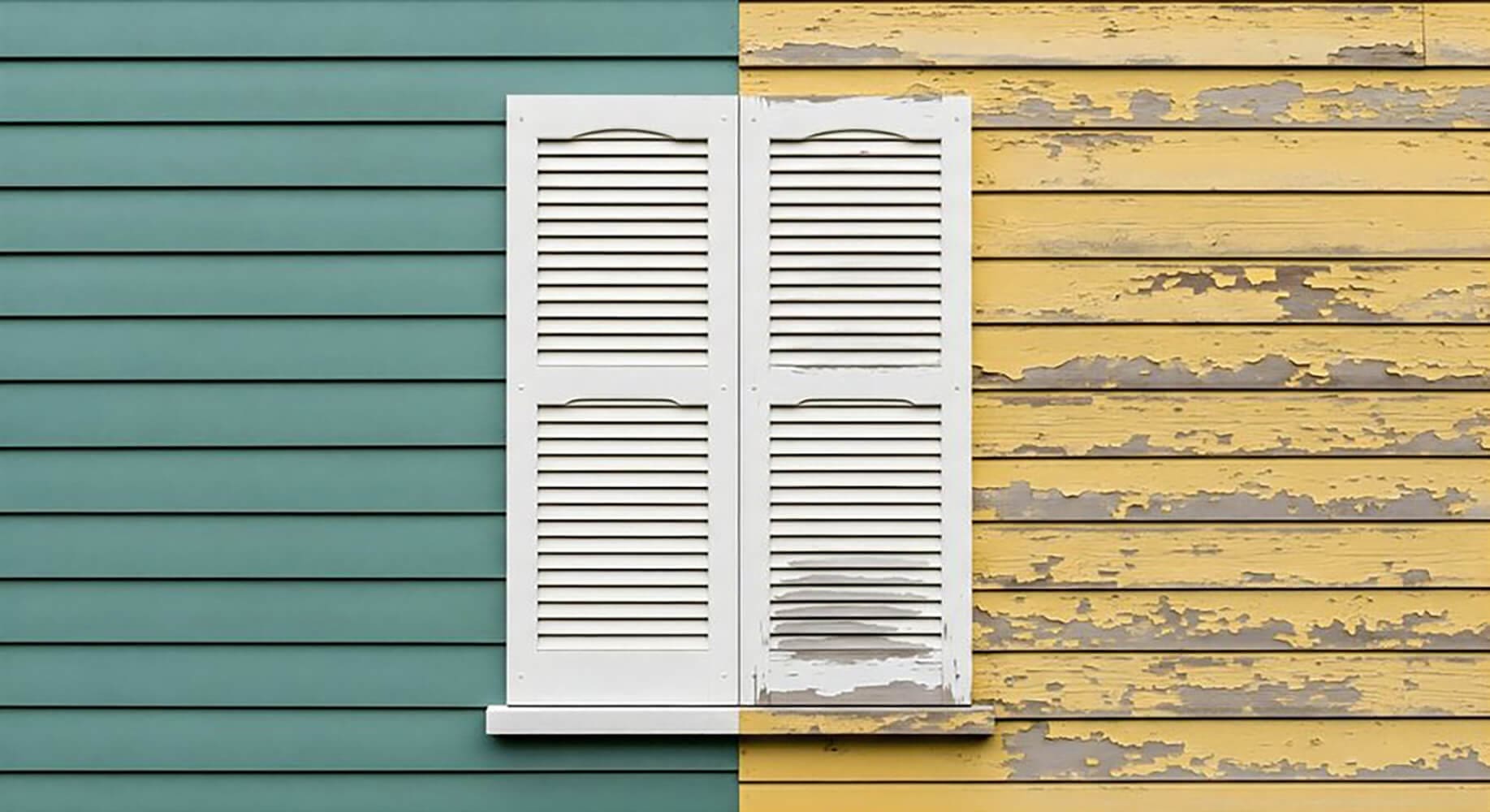
Most Providence homeowners don’t think much about their deck until the weather turns and they’re ready to use it again. Then they step outside, take a closer look, and notice the surface isn’t in the shape they expected. The color has shifted. The wood looks dry. Something isn’t right.
Sun exposure is usually the reason. UV rays work on a deck surface all season long, and the damage they cause compounds quietly between uses. Learning how to protect a deck from sun damage before that cycle goes too far is what keeps a deck looking good and structurally sound for years.
This blog covers how UV exposure damages wood, how to tell if your deck is already showing the signs, what professional staining does to stop it, and why late spring is the right time to act in Providence.
What UV Exposure Actually Does to a Wood Deck
Wood holds together because of lignin, a natural compound that binds the wood fibers and gives the surface its color and stability. UV rays target lignin directly. With repeated exposure, the compound breaks down and the surface begins to gray, dry out, and lose the structural integrity that keeps it smooth and solid.
What makes this process easy to underestimate is that it happens gradually. A deck doesn’t show obvious damage after one season. But each summer of unprotected exposure compounds the last one, and by the time the deterioration is visible, the wood has already lost a significant amount of its protective capacity.
The consequences go beyond appearance. As UV breaks down the surface, the wood becomes more porous. A more porous surface absorbs moisture more readily, which creates a cycle:
- UV dries and opens the wood fiber
- Moisture enters during rain or humidity
- The wood expands and contracts with temperature changes
- Cracking, checking, and splintering follow
This is why sun protection for a deck isn’t just about keeping it looking good. It’s about keeping the surface intact enough to hold a protective finish and hold up under regular use. A deck that has gone too long without UV protection becomes harder to restore and requires more extensive prep before staining can do its job.
How to Tell If Your Deck Needs Protection Now
Not every deck that needs staining looks obviously damaged. Some of the clearest indicators are easy to miss without knowing what to look for. These four signs each point to a different stage of UV-related failure.
The Water Bead Test
Fill a cup with water and pour a small amount onto the deck surface. Watch what happens. If the water beads up and sits on top, the existing finish is still doing its job. If it soaks into the wood within a few seconds, the protective barrier has failed.
This test works regardless of how the deck looks. A surface can appear fine and still be completely unprotected. The water bead test is the most reliable way to confirm whether the wood has any meaningful defense left against UV exposure and moisture.
Graying and Discoloration
A deck that has turned gray or silver has undergone lignin breakdown. That color shift isn’t a surface stain or a weathering quirk. It’s the direct result of UV rays degrading the compound that holds the wood together and gives it its natural tone.
Graying tends to be dismissed as normal aging. It isn’t. It’s active deterioration, and it continues to deepen the longer the surface goes unprotected.
Surface Cracking and Checking
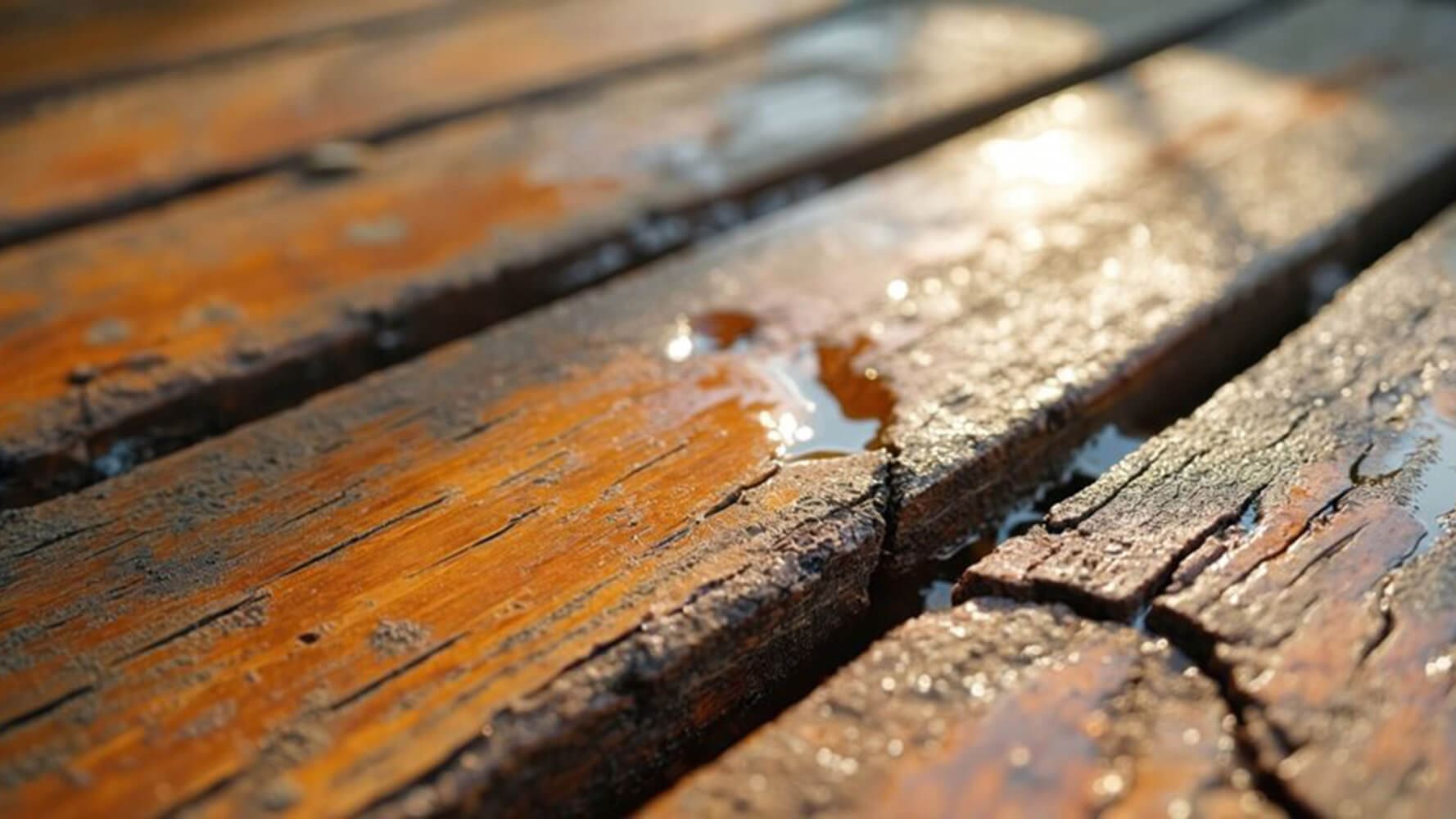
Checking refers to shallow cracks that run along the wood grain. They form when UV exposure repeatedly dries the surface and the wood absorbs moisture in between, expanding and contracting with each cycle. Over time, that movement opens the grain.
Once checking begins, the surface is no longer intact. Stain still works on a checked surface, but the prep required is more involved, and the window to protect the wood before the damage gets worse is narrowing.
Splintering in High-Traffic Areas
Splintering tends to show up first on walkways, steps, and areas that see regular foot traffic. It’s a sign the wood’s surface layer has dried out enough to break apart under load. UV exposure is almost always a contributing factor, since UV-damaged wood loses the flexibility that lets it handle repeated stress without breaking.
A deck showing splintering needs attention soon. The condition worsens quickly once it starts, and continued sun exposure without protection accelerates it.
How Professional Deck Staining Protects Against Sun Damage
Staining does more than restore the look of a weathered deck. A quality stain addresses UV penetration at the wood fiber level, which is where the damage actually starts. Understanding how it works helps explain why professional application can produce results that hold up over multiple seasons.
A penetrating stain works by entering the wood rather than sitting on top of it. That distinction matters because a coating that stays on the surface can peel, chip, and separate when the wood expands and contracts. A stain that penetrates moves with the wood and stays bonded to the fiber underneath. The protection stays in place.
Two things happen once the stain is in:
- UV-blocking pigments in the stain absorb and deflect the rays that cause lignin breakdown, slowing the graying and drying process
- The seal the stain creates reduces moisture absorption, which breaks the cycle of swelling and contraction that leads to checking and splintering
Product Selection
A professional doesn’t apply the same product to every deck. The condition of the wood determines which type of stain is appropriate.
Solid stains carry higher pigment density, which means stronger UV blocking. They are the right choice for decks with significant existing sun damage, heavy graying, or fading where the wood needs restoration as much as protection.
Semi-transparent stains allow the grain to show through. They work well on decks in good condition where the goal is maintenance rather than correction. The trade-off is lighter UV protection, which is acceptable when the wood surface is still intact.
Applying the wrong type affects both how the deck looks and how long the protection lasts. A professional assesses the current surface condition before making a recommendation.
Surface Preparation
Prep work determines whether a stain bonds correctly. A professionally stained deck starts with:
- Cleaning to remove surface contaminants, mildew, and residue from any previous finish
- Light sanding to open the grain and create a surface the stain can penetrate evenly
- Inspection for checking, splintering, or areas that need additional attention before product goes on
Skipping or rushing prep is the most common reason deck stains fail ahead of schedule. The stain can only protect what it bonds to. If the surface isn’t clean and properly prepared, the protection is compromised before application is complete.
Once prep is done and stain is applied, cure time matters. The deck needs to be left undisturbed so the stain can penetrate fully and set. A professional accounts for weather conditions and temperature when scheduling the job to make sure curing happens under the right conditions.
Why Providence’s Late Spring Climate Makes This Urgent
Providence decks face a specific seasonal pattern that makes timing a staining project more consequential than homeowners often realize. The combination of what winter does to wood and what late spring brings next creates a narrow window where protection matters most.
A New England winter puts wood through repeated freeze-thaw cycles, sustained cold, and months of low UV exposure. By the time spring arrives, deck surfaces are often depleted. Existing finishes have been stressed. Any protection that was marginal heading into fall is likely gone by March or April.
Then Providence’s UV intensity shifts sharply. From May onward, the region sees a significant increase in direct sun hours and UV load. That pattern creates a specific problem:
- Decks emerge from winter in weakened condition
- UV exposure escalates quickly through late spring and into summer
- Unprotected or under-protected wood absorbs the damage during the highest-intensity months of the year
Late spring also provides the best application conditions of the year. Temperatures are moderate, humidity is lower than it will be in July and August, and the wood is dry enough from winter to accept a penetrating stain properly. Those conditions allow the stain to cure and bond the way it needs to before summer heat and foot traffic arrive.
Waiting until summer to address a deck that already needs staining means applying product in less favorable conditions and losing the highest-UV months without protection in place. Waiting until damage becomes obvious means the wood has already absorbed a full season of exposure it wasn’t equipped to handle.
The window is late spring. Acting within it gives a professionally stained deck the best chance of performing through the full outdoor season.
Protect Your Deck Before Summer Arrives
Sun damage on a deck is cumulative. Each season of unprotected exposure adds to what the previous one left behind, and the point where restoration becomes difficult arrives faster than most homeowners expect. The decks that hold up well over time aren’t the ones that get repaired after problems appear. They’re the ones that get protected before peak exposure begins.
For Providence homeowners, that means late spring. The UV load is climbing, the wood is coming out of a hard winter, and the conditions for professional staining are as good as they’ll be all year. Waiting costs the wood a full high-UV season without protection in place.
If your deck is showing any of the signs covered here, or if it has been more than a couple of seasons since it was last stained, now is the right time to have it assessed. We help Providence homeowners protect their decks from sun damage before summer arrives. Reach out to us to schedule a professional deck assessment and get your deck ready for the season.