Should You Refinish or Replace Kitchen Cabinets This Winter?
Deciding whether to update your kitchen cabinets can feel especially challenging during the winter months, especially when homeowners start asking themselves, should you refinish or replace kitchen cabinets to get the best results. Worn finishes, dated colors, and everyday wear tend to stand out more when you’re spending extra time indoors, making cabinet updates feel more urgent than they might during other seasons.
The uncertainty usually isn’t about wanting a change. It’s about choosing the option that makes sense financially, practically, and visually. Refinishing can offer a refreshed look without a full renovation, while replacement opens the door to a completely new kitchen setup. Each path comes with tradeoffs that aren’t always obvious at first glance.
This comparison is designed to help homeowners understand the real differences between refinishing and replacing cabinets, what each option realistically delivers, and how to make a confident, well-informed choice when planning a winter kitchen update.
Why Homeowners Compare Refinishing vs. Replacing Kitchen Cabinets
Many homeowners reach this decision point after living with their kitchen for several years. Cabinets may still function well, but visible wear, outdated finishes, or changing style preferences start to stand out over time.
Winter often brings these issues into sharper focus. With fewer outdoor projects and more time spent inside, homeowners begin noticing what feels tired or inefficient in the kitchen and start planning updates that don’t require a full renovation.
At its core, the decision comes down to scope. Refinishing improves the appearance of existing cabinets while keeping the structure intact. Replacement removes the old cabinets entirely and allows for broader changes to layout, materials, and storage.
Understanding how these two options differ in cost, condition requirements, and results helps homeowners evaluate which solution fits their kitchen and winter project goals without unnecessary guesswork.
What Refinishing Kitchen Cabinets Involves and When It Makes Sense
Cabinet refinishing updates the visible surfaces of existing cabinets without removing them. The cabinet boxes stay in place, while doors, drawer fronts, and frames are cleaned, prepped, and refinished with a new paint or stain. This approach can also work for certain materials homeowners often question, such as laminate, including situations where homeowners want to paint laminate cabinets rather than replace them.
For homeowners, this means a noticeable visual upgrade without changing the structure or layout of the kitchen. The focus is on appearance, not construction.
A professional refinishing project typically includes removing doors and hardware, deep cleaning to eliminate grease, preparing surfaces for proper adhesion, addressing minor imperfections, and applying primer and finish coats before reinstallation.
Refinishing makes the most sense when cabinets are in good physical condition and the current layout still works well. It’s a popular option for homeowners who want a cleaner, more modern look without the cost or disruption of a full cabinet replacement.
When done professionally, refinishing delivers consistent, polished results that refresh the kitchen while preserving its original footprint.
Signs Your Cabinets Are Good Candidates for Refinishing
Not every kitchen is a good fit for refinishing, but many homeowners are surprised by how often their existing cabinets qualify. The key factor is condition, not age.
Cabinets that are structurally sound are often excellent candidates. If the boxes are solid, securely mounted, and free from warping, refinishing can extend their life significantly.
Doors and drawer fronts should also be in good shape. Minor scratches, small dents, or worn finishes are typically easy to address during the prep process. Cracks, swelling, or delamination are more concerning and may limit refinishing options.
Refinishing makes the most sense when the current layout still works well for daily use. If storage, spacing, and cabinet placement meet your needs, there’s no functional reason to replace them.
Cosmetic issues are usually the main driver for refinishing projects, such as:
- Outdated paint or stain colors
- Visible wear around handles and edges
- Fading or uneven finishes
- A desire to modernize the kitchen’s look
When appearance is the problem and structure is not, refinishing is often the most efficient solution.
What Replacing Kitchen Cabinets Involves and When It’s the Better Option
Replacing kitchen cabinets is a more involved project that removes the existing cabinets and installs entirely new ones. This changes both the appearance and functionality of the kitchen.
Old cabinets are taken out and new cabinet boxes, doors, and hardware are installed. Depending on the scope of the project, replacement may also require coordination with other trades, which can extend timelines and increase disruption.
The main advantage of replacement is flexibility. Homeowners can adjust cabinet sizes, improve storage, change materials, and rework the layout to better fit how the kitchen is used.
Replacement is typically recommended when existing cabinets have underlying issues that refinishing can’t address or when the goal is a broader kitchen update rather than a surface-level change.
This option is best suited for homeowners who want long-term structural improvements, not just a refreshed appearance.
Signs Cabinet Replacement May Be Necessary
Some cabinet issues go beyond surface wear and can’t be solved through refinishing. In those situations, replacement is usually the more practical and lasting solution.
Structural damage is one of the clearest warning signs. Cabinets affected by water leaks, swelling, rot, or warping often lack the stability needed to support a new finish. Even if refinished, these problems tend to resurface and compromise the results.
Functionality is another major factor. If the cabinet layout feels inefficient, storage is poorly designed, or the kitchen no longer supports how the space is used day to day, refinishing won’t address those limitations. Replacement allows homeowners to correct design flaws instead of working around them.
Material quality also plays a role in the decision. Cabinets made from thin particleboard or low-grade materials may not accept paint or stain evenly, leading to shorter-lasting results and visible wear sooner than expected.
Replacement is also the better option when the goal is a major design change. If homeowners want to rework the layout, upgrade storage solutions, or completely change the kitchen’s style, starting with new cabinets provides a stronger foundation for long-term satisfaction.
Cost Differences Between Refinishing and Replacing Kitchen Cabinets
Cost is often the biggest factor homeowners consider when deciding between refinishing and replacement. While exact pricing varies by kitchen size and material, the gap between the two options is usually significant.
Professional cabinet refinishing typically falls into a mid-range investment. Pricing is influenced by the number of cabinets, the type of finish selected, surface repairs needed, and the level of detail involved. Because the existing cabinet boxes stay in place, labor and material costs are much lower than a full replacement.
Full cabinet replacement generally costs substantially more. In addition to new cabinets themselves, homeowners are paying for demolition, disposal, installation, and often related work such as adjusting countertops, plumbing, or flooring. Custom cabinets, specialty materials, and layout changes can push costs even higher.
Several factors affect pricing for both options, including cabinet size, material quality, finish choices, and overall kitchen complexity. Older homes or kitchens with unusual layouts may also require additional labor.
Refinishing is often the more budget-friendly choice because it focuses spending on visible results rather than structural changes. For homeowners whose cabinets are in good condition, refinishing can deliver strong long-term value by extending cabinet life without the expense of a full renovation.
Timeline and Disruption: How Each Option Affects Your Home in Winter
Project timeline and day-to-day disruption matter more during winter, when families spend more time indoors and rely heavily on their kitchens. Understanding interior painting expectations can help homeowners plan realistically for downtime, noise, and daily routine adjustments.
Cabinet refinishing is usually completed in a shorter timeframe. Many professional projects take several days to about a week, depending on kitchen size and finish complexity. Because the cabinet boxes remain in place, much of the work is focused on surfaces rather than construction.
Replacement projects typically take longer. Removing cabinets, installing new ones, and coordinating related trades can stretch the timeline into multiple weeks. Unexpected delays are more common, especially if structural issues or supply backorders arise.
Kitchen downtime is another consideration. With refinishing, homeowners often retain limited kitchen use during parts of the project. Replacement can leave the kitchen largely unusable for extended periods, which can be especially inconvenient during colder months.
Winter routines tend to be more home-centered, making disruption more noticeable. Refinishing is often preferred during this season because it minimizes noise, dust, and loss of kitchen access while still delivering a meaningful visual upgrade.
How Winter Conditions Affect Cabinet Refinishing and Replacement
Winter can actually be a favorable season for cabinet projects, especially when most of the work takes place indoors. Temperature control and consistent indoor conditions often work to a homeowner’s advantage.
Cabinet refinishing relies on proper surface preparation and controlled curing conditions. During winter, indoor heating systems help maintain stable temperatures, which supports consistent paint application and finish durability. Humidity levels are also easier to manage indoors compared to warmer, more variable seasons.
Replacement projects are less affected by temperature but may still face seasonal challenges. Material deliveries, scheduling multiple trades, and extended timelines can be impacted by winter weather, especially if exterior access or utility work is involved.
Professional indoor refinishing is particularly well-suited for winter because it avoids exposure to extreme heat or humidity. Painters can focus on controlled environments, leading to smoother finishes and more predictable results.
Another winter advantage is scheduling. Many homeowners postpone renovations during colder months, which can mean better availability and more flexible timelines when planning a cabinet refinishing project.
Visual Results and Longevity: What Homeowners Can Expect From Each Option
Both refinishing and replacement can dramatically change how a kitchen looks, but results depend on cabinet condition and the quality of the work.
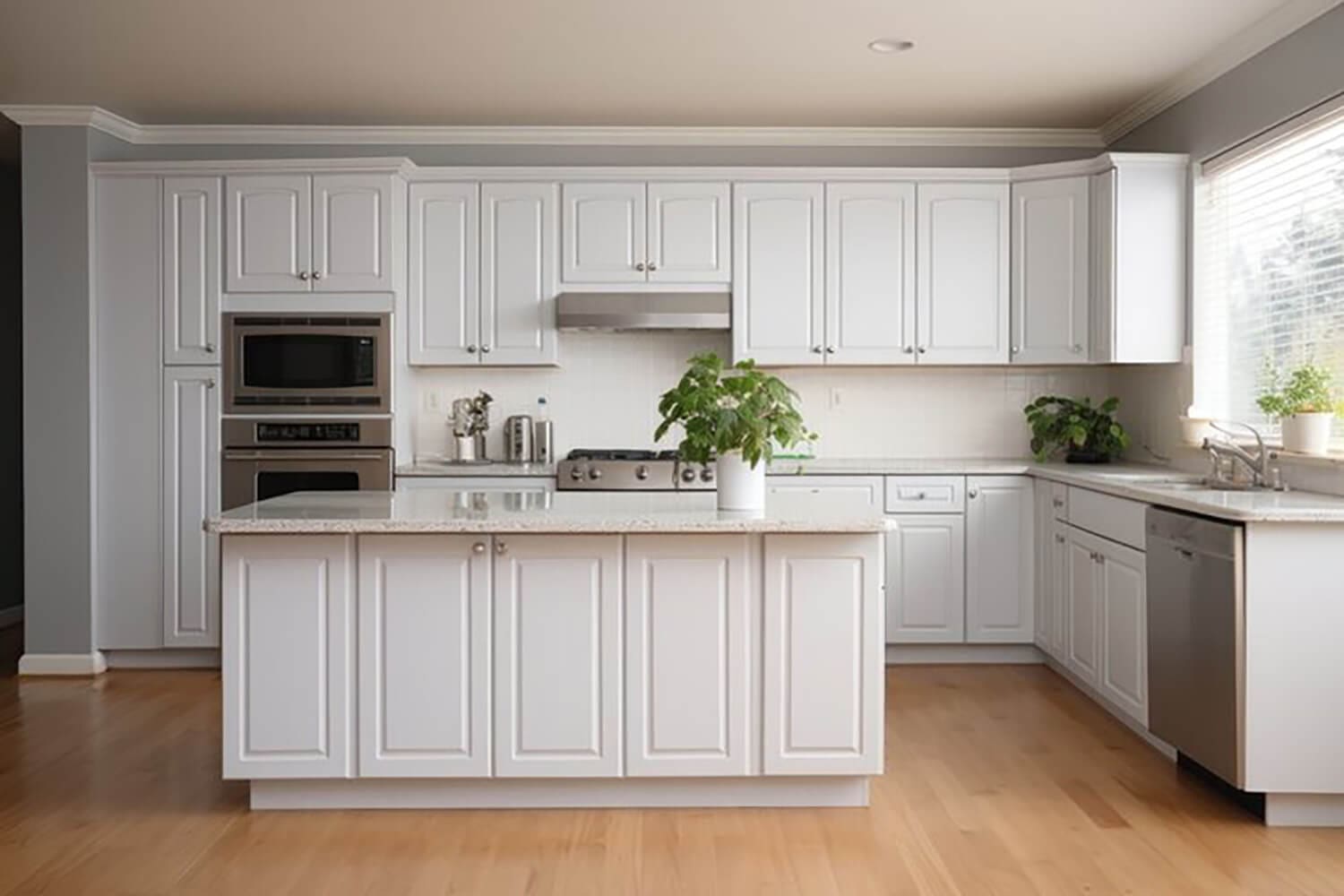
Professionally refinished cabinets can look nearly new. Updated colors, smooth finishes, and clean lines often deliver a modern appearance that holds up well to everyday use when proper prep and materials are used.
New cabinets offer the longest overall lifespan. Because all components are new, homeowners benefit from updated materials, construction methods, and hardware designed for long-term durability.
Visually, refinishing can deliver a comparable impact when cabinets are structurally sound and the layout still works. In those situations, homeowners can achieve a refreshed, high-end look without the added cost or disruption of a full replacement.
How to Decide Which Cabinet Option Is Right for Your Kitchen This Winter
Choosing between refinishing and replacement comes down to weighing a few core factors honestly. There’s no universal right answer, only the option that best fits your kitchen and your goals.
Budget is often the starting point. Refinishing typically makes sense when homeowners want a noticeable upgrade without the cost of a full renovation. Replacement is better suited for larger budgets tied to major design changes.
Cabinet condition matters just as much as cost. Structurally sound cabinets with cosmetic wear are strong candidates for refinishing. Cabinets with damage, poor materials, or long-standing issues usually point toward replacement.
Timeline and disruption should also be considered. Winter projects benefit from shorter timelines and less interruption to daily routines. Refinishing generally keeps the kitchen more usable, which can be important during colder months.
Personal goals play a role as well. If the objective is a refreshed look and updated style, refinishing often checks every box. If the goal is a new layout, improved storage, or a complete redesign, replacement provides more flexibility.
A professional evaluation helps clarify which option aligns best with the kitchen’s condition and the homeowner’s expectations.
Choosing the Best Cabinet Solution for Your Winter Kitchen Update
When comparing refinishing and replacement, the most important takeaway is that each option serves a different purpose. Refinishing focuses on improving what’s already there, while replacement creates something entirely new.
Refinishing is often the right fit when cabinets are structurally sound and the layout still works well. It offers a noticeable visual upgrade, a shorter project timeline, and less disruption, which can be especially appealing during winter months.
Replacement makes more sense when cabinets have deeper issues or no longer support how the kitchen is used. It allows for layout changes, new storage solutions, and material upgrades that refinishing simply can’t provide.
The “right” choice depends on cabinet condition, budget, and the scope of change you’re aiming for. Winter can be a practical time to move forward with either option, thanks to indoor working conditions and greater scheduling flexibility. Seasonal trends also show why many homeowners choose to refinish cabinets during cooler months when interior projects are easier to plan and manage.
For homeowners weighing their options, clear information and realistic expectations are key. Understanding what refinishing and replacement each deliver helps ensure the project aligns with both short-term needs and long-term goals.
If you’re thinking about updating your kitchen cabinets this winter, we can help you understand your options clearly. A professional evaluation through our cabinet refinishing services gives you honest insight into whether refinishing is the right fit for your space and what kind of results you can expect. Reach out to discuss finishes, timelines, and availability so you can plan a cabinet update that makes sense for your home.